Pages

Friday, February 27, 2009

The Pursuit of Knowledge, The Practice of Discernment (part 2)


While our state as a whole ranks quite high in the "level of education achieved" demographic, our specific geographical area consists almost entirely of folks who opted to end their formal education with their high school diploma. This rarely makes any impression on me whatsoever; there are many, many areas of aptitude in life, and I'm not so haughty as to think that book learning is the only way to go.

I will admit, though, that there's a certain thrill in sitting down with someone who can engage in an animated, detailed discussion of the abstracts of life. Science. Literature. Philosophy. Art. Culture. History. These are the bits that are often missing from my adult conversation. And these are the very things that Cousin Malcolm brought into our home during his short stay.

Cousin Malcolm had barely unloaded his pack when he was regaling us all with tales that rival anything in "Around the World in Eighty Days." A pitch-perfect ear for story-telling, a showman's gift of timing and the habit of producing--at just the right moment--a key piece of evidence only served to fuel our hunger for more of what he was selling.

"So there I was, sitting under a bridge in Paris," one of Cousin Malcolm's stories began, and instantly, we all snapped to attention.

A bridge? In Paris? Do tell!

"So there I was, with my bag--" he swept his hand toward the very sack that now slouched tiredly beside our couch, "just smoking a cigarette under this gorgeous bridge. It was almost night, but not quite. And then, this fellow came by and--you won't believe this!"

His hand disappeared into his pocket. In a moment, he produced a shiny Euro. He held it out for the children to admire, then slipped it into Logan's hand with a wink.

"This man gave me that Euro. He said, 'Here, son, go buy yourself a beer.' And you know the best part? He was Haitian. An artist, of course. It was a riot. I ended up staying with him for a few days. Amazing guy."

From there, Cousin Malcolm dived into a long discussion of the state of modern art in France, then took a detour into the state of government in Haiti before heading back to the bridge in Paris. We rode along on the journey, anxious to hear more. Then he was off again.

"You do know why there are so many ponts in Paris, right? Do you know how long the Seine is? Want to learn a song?"

In the course of a few short days, the topics covered were vast and sundry--and personal. While I've told my children about Marie Curie and her work, Cousin Malcolm took my children along on his personal tour through the Institut Curie. Stops included several theories that she chased, scientists that she worked with and a gaggle of silly biographical stories that morphed a giant of science from an untouchable icon to a woman--a mother--who pursued a dream.

Having been, and seen, and touched for himself, so much of the world is personal to Cousin Malcolm. Who better to open the doors of understanding and insight than one who can give a first person account?

After the children went to bed, those doors swung even wider. Mr. Blandings and I enjoyed bouncing ideas off of Malcolm. String theory ... what do you make of that? Restoring paintings ... good idea? Transubstantion--how do you think that works? What's this I hear about some idea about crystals being alive? Where do you stand on--?

On the second night, we stepped into the idea of Creationism vs. Darwinism. Cousin Malcolm--a cultural, though non-practicing Catholic--has studied the theories of Darwin quite thoroughly but, he revealed, finds holes in the overall findings. A viewing of "Expelled" was arranged. And the conversation took a turn that really wasn't surprising at all. In fact, Paul faced the very same issue in the book of Acts when he visited Athens.

19Then they took him and brought him to a meeting of the Areopagus, where they said to him, "May we know what this new teaching is that you are presenting? 20You are bringing some strange ideas to our ears, and we want to know what they mean." 21(All the Athenians and the foreigners who lived there spent their time doing nothing but talking about and listening to the latest ideas.)


Cousin Malcolm was intrigued--absolutely intrigued--by the ideas that we presented to him regarding the many positions that Christians take on Creationism. Old Earth, Young Earth, evolution within species, no evolution within species ...the many shades of the theologies that exist within the Christian community. He swallowed every bit that we could offer eagerly, countering, digging and playing devil's advocate all along the way.

At the end of the night, he was completely satisfied to admit that he was content to have knowledge of, but no commitment to, anything.

And this is what we ultimately discovered about Cousin Malcolm: He is, for all intents and purposes, an Athenian nomad somehow trapped in the wrong time. So great is his knowledge, so curious is his mind, that it is virtually impossible for him to reduce anything to truth. There are simply too many options. Too many alternatives. Too many theories.

The world as Cousin Malcolm knows it is shades of grey. Truth is relative. Worst of all, it is never ever definitive.

This is how I came to realize that not living among the academic giants of our time is really not a loss. There is, after all, such a thing as knowing too much. God created us to wonder, to learn and to pursue truth. But he also created in us a gift that many of the most intelligent minds can somehow not grasp: discernment.

You can be interested, educated and engaging ... but if you lack discernment, what good is any of it? How do you know what theories to hang on to, and which to discard? How do you differentiate between good and better? How do you function?

When you think too much, even the simplest facts of life are much harder to grasp.

"I know how to multiply," Atticus bragged as we sat at breakfast one morning.

"Do you know zero times zero?" Malcolm asked.

"Of course. It's zero."

"But do you know why it's zero?"

"Because if I give no one gives me anything, then I still have nothing," Atticus said.

"Yes, but can you prove that?" queried Malcolm, grabbing a piece of paper from the counter. Within minutes, he was scribbling a proof worthy of a graduate school mathematical course. Which he's taught, of course.

At the end of the lesson, Atticus's brows were knit tightly.

"I think my answer made more sense," said Attiucs. "Nothing times nothing is nothing. I don't see why it has to be so complicated."

We drove Cousin Malcolm an hour and a half east on Sunday. We spent the afternoon tooling around a touristy little village in the mountains, where the children oohed and aaahed at Malcolm's ability to converse with groups from four different countries--in their native tongues, naturally. He entertained us all with a story about apprenticing in a Bavarian clock maker's shop. We ate in a deli, then we dropped Cousin Malcolm at a small, deserted motel. His plan was to walk due east for two days, then pick up a ride at the state line. Jo cried when we pulled away from the curb; I heard Atticus praying for Malcolm's safety as he contemplated, no doubt, the idea of hitchhiking with new and more personal horror.

When we arrived home, we discovered a small parcel of items that Cousin Malcolm had left behind to thank us for our hospitality. A booklet written in hiragana. A sampling of international coins. A bookmark listing the official website of a university's advanced physics lab. And a copy of "The Odyssey," with songs in the original Greek.

What will stay with us the longest, though, are the tales of adventure shared by Cousin Malcolm, who brought strange ideas to our ears ... without necessarily knowing what they meant.

Thursday, February 26, 2009

The Pursuit of Knowledge, The Practice of Discernment (part 1)


We spent the weekend with a house guest. This is news in my little corner of the world because I never, ever have a house guest. Some people are hospitality central, always opening their homes and having family and friends come and stay a spell. This is not me. If I exude anything, it's apparently not the kind of softness and warmth that makes folks set up shop for a weekend. For supper, sure. But a whole weekend of suppers? No.

But this particular extended family member had not a clue of how unprepared and ill-suited I am for overnight entertaining. The third child of Mr. Blandings's aunt, you could barely even call this young man a cousin--especially since Mr. Blandings himself hadn't laid eyes on the fellow in more than half a decade.

But the phone rang last week, and I was greeted by a friendly voice that addressed me in a way that implied familiarity.

"MG? This is Malcolm, Mr. Blanding's cousin."

Ah, yes. Malcolm. The legendary Malcolm. While I wouldn't have been able to pick Malcolm out of a crowd, I surely knew him by reputation: graduated in the top of his private school class, begged off attending the top-tier art schools he'd been wooed by, backpacked his way across Australia and Ireland before returning stateside to pursue undergraduate degrees in mathematics and linguistics, flitted off after graduation to teach in Asia, more backpacking throughout Europe, months spent in South America ...

What, this isn't your life? :-)

"Malcolm! Wow. How are you?" I asked, unable to shake the image of the wiry boy who had attended my wedding 13 years previous.

"Well, actually ... I was wondering if I could come for a visit."

Selfishly wondering how many juicy tidbits of Asian cultures he could impart on my children (who are studying Core 5, after all), I answered, "Absolutely! What do you have in mind?"

"I can be there in an hour. I'm 45 miles away according to google maps."

And this, my friends, is the joy of a vagabond relative. You just never know when--or where--they'll turn up.

Mr. Blandings managed to put Malcolm off for a few days due to a round of illness we had coursing through the house. But sure enough, on Friday afternoon, the doorbell rang and there before me was not the 14 year-old who had vied for the garter at my wedding, but a tall, rustic-looking young man closing in on thirty with the majority of his life's belongings strapped to his back and a pack of cigarettes peeking from his pocket.

Jo, Atticus and Logan stared at him with half-concealed fascination tinged with horror.

"You smoke?" Logan asked. Note to self, I thought, give a crash course on manners to the six year-old.

"President Obama smokes," Atticus volunteered helpfully.

"Yeah, but I don't trust anyone who smokes. Seriously. Everyone knows how bad it is for you. What kind of a choice is that?" Logan countered. Note to self, I screamed internally, give a crash course on manners to the six year old tonight in the bathtub when no one else is around.

And this is how we began what turned into an incredible adventure with the brilliant, irrepressible cousin Malcolm.

Cousin Malcolm allowed as to how he may stay a night or three. And this is where things got really interesting. Cousin Malcolm had apparently made his way west from Boston, where he had deplaned from his latest wanderings in Seoul. Not one to travel by traditional means, Malcolm had alternated between walking and riding his thumb across the entire length of the US, and was now working his way east to his parents' home.

"You hitchiked?" Jo asked as he unlaced a pair of very experienced Chucks.

"I caught rides," he said, not above playing the semantics game.

"It's really dangerous to hitchhike. Someone could, like, kill you." Yes--this was Logan.

"There are lots of really interesting folks out there," Malcolm answered, as if that settled it.

Apparently, it did. Because for the next two nights, my children lived with a modern Jack Kerouac. And let me tell you, it was eye-opening for us all.

Wednesday, February 25, 2009

Through your child's eyes--a diatribe complete with a giveaway!

Everyone has a soap box or two that they lug around with them. One of my special favorites seems to be vision issues and young children. Seriously--I have cornered more parents than I can count with my concerns after watching their child squint at a book, turn their head while reading, struggle to print on a line or give up quickly when sorting through a box of like toys.

When Jo was diagnosed with vision difficulties as a preschooler, I began educating myself on the complex dance that results in the miracle of sight. While the entire human body is a wonder, I find that vision is a particularly amazing piece of creation. The coordination--and communication--between membranes, lenses, nerves and brain is far beyond what I could have ever dreamed up. So many pieces to the puzzle that fit just so. So much development and such a small margin for error. It's dizzying, I tell you.

Unfortunately, many parents put in desperately few hours ensuring that their child's eyes are developing properly or that he or she has the range of vision that is appropriate for his or her age. Heck, most parents don't even know that there is a range of normal vision, and that is changes as your child--and his eyes, muscles, etc.--mature. Parents don't know how closely vision is associated with overall behavior, how sensory input through the eyes can be overwhelming or even how small things such as print size can impact a child who seems to have "learning disabilities."

Why don't parents know these things? Because the people who have the knowledge generally don't take the time share it unless there are glaring red flags. Doctors don't pick up on it. Once a year, a nurse tells your son to stand on a line and read an eye chart, and then tells you that he passed. Unless you mention that he can't read for periods of longer than ten minutes, no one's the wiser. Teachers don't point out what appears to be a vision issue until it impacts classroom performance. And, believe it or not, your friendly neighborhood optometrist won't tell you either. Their training stops and starts with a general classification of eye health and vision. Much beyond that and they're swimming in deeper water than their sheepskin can float on.

For the bigger issues, you need the big guns. You need a pediatric opthamologist.

A pediatric opthamologist can tell you not only how well your child can see, but how his or her eyes are developing. Are the muscles working in tandem? What is the ideal visual range for my child? Do his or her eyes tire easily? Is there any crossing? What print size is recommended for my child? And this is just for starters, folks.

While an initial visit to a pediatric opthamologist may be a budget cruncher, I can't recommend it highly enough. Armed with the information that this specialist will give you, I can almost guarantee that you will find some way to homeschool better, smarter and with less fuss on your child's behalf even--and this is the kicker--even if your child's vision is 20/20. If I had a nickel for every person who took my advice and saw a pediatric opthamologist and then reported back to me that their child really wasn't just complaining, he couldn't see the words on the page ... let's just say I'd be hosting this blog on a paid site instead of blogger. :-)

I posted last week about sensory issues and homeschooling and trust me, vision is one of the senses. Input that comes in fuzzy, inaccurately, cloudy or erratically hits the brain with a thud and pushes out behavior that stumps adults like us who just can't see the world the way that the little people we're charged with parenting do. The kids can't fix it themselves. They need help learning coping skills and working with the neurological wiring that God gave them. No matter how frustrating it is to parent a child who fidgets, spins like a top or can't find a specific Lego in a box full of clashing colors, you hold the key to helping your child mature through this.

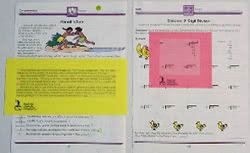
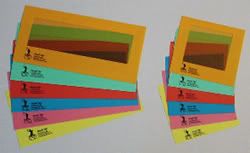
I mentioned in my last sensory post that I had a sampling of the line by line readers offered by Heads Up! and was planning on giving some away. Before I give out the rules, here's what Heads Up! has to say about their products.

Heads Up! Top of the Line This reading aid has a blue or yellow highlighted strip along the top to help readers "keep their place" along a line of text, graphs, or charts. Use of color has been shown to be helpful in focusing attention, so the Heads Up! Top of the Line is helpful even for proficient readers who are distractible or have difficulty maintaining visual attention for adequate periods of time. Makes a great bookmark, too! (Size 2-3/8" by 8")

Heads Up! Double Time This reading aid has a transparent yellow or blue strip along the top that highlights an area large enough for the reader to view two lines of most texts. A visual reminder to continue reading to the next line, the Heads Up! Double Time is also a helpful tool for proficient readers who benefit by using color to help focus attention. Makes a great bookmark, too! (Size 2-3/8" by 8")

Heads Up! Frame - 4 x 4 1/2 Our own creation, these frames are made of transparent colored polycarbonate with a printed frame. The large Heads Up! Frames are 4" x 9" rectangles. You can direct attention and focus by placing the frames over workbook pages or other written materials to be examined. The frames block in key material while the color contrast helps maintain attention. These frames are especially useful for marking the place on the page for individuals who tend to look away from the page frequently. When looking back at the page they can easily and quickly find the framed-in area. Available in the following colors: yellow, pink, blue, red, green, and orange.

Heads Up! Frame - 4 x 9 Our own creation, these frames are made of transparent colored polycarbonate with a printed frame. The small frames are 4” x 4-½” squares. These frames are useful for the child who feels overwhelmed when viewing an entire page of material; the teacher can frame in just a section of the page so that it appears more manageable to the child. Available in the following colors: yellow, pink, blue, red, green, and orange.


Heads Up! Reader The Heads Up! Reader has a highlight strip of color between two strips of grey. The highlighted section aids in visual tracking and the color helps maintain attention to printed text. The straight edges can be used to neatly underline key words or phrases. The Reader is thin and flexible, and can be used as a bookmark for added convenience. Choice of yellow, green, red, blue, orange, pink or clear.

These are wonderful tools for new readers, for children with sensory input differences, for kids with ADHD, for children whose attention is often pulled away from a page, for kids who struggle to stay on task for ... EVERYONE.

O.k., now for the fun part. I am giving away two complete sets of Heads Up! readers. To be entered in the drawing, simply leave a comment that lists the age/ages of the child or children you'd be using the readers with and whether you'd prefer yellow or green frames. Leave a separate comment if you're a follower of this blog (or if you choose to become a follower) and I'll throw your name in the hat twice. The drawing will be held on Friday, March 6 and winners will be posted at that time.


Monday, February 23, 2009

TOS Review: Math Tutor dvds

If you've read this blog for very long, you know that I very, very rarely run out of things to say. I'm a font of words if not wisdom and quite often ramble on for so long that only two posts can fit on page one of this blog.

So imagine my conundrum when I discovered that I really can't find anything to say about the dvds offered by MathTutorDVD.com My sample copies were Algebra 2 Tutor (6 hour video course) and The Basic Math Word Problem Tutor, an 8 hour ride through ... well, word problems.

I watched the videos. And yet ... I'm drawing a blank.

And then it hit me: essentially, these videos are the exact same instruction that I received in a public school classroom. The formula? Guy with white board explains math. The outcome? Mary Grace doodles on notepad and wonders what's for dinner.

The instruction is thorough, practical (and I quote: "Count on your fingers if you have to.") and without distraction. Investing in one of these courses will definitely earn your child a full credit toward the mathematical discipline at hand. It's old-fashioned school learning at its best.

It's also the mathematical equivalent of driving your car through a barren desert with the air conditioner on--you know what's out there, but it's just not appealing enough to get out of your comfort zone and indulge in.

Saturday, February 21, 2009

TOS Review: Bible Story Songs

My kids can memorize just about anything if it's set to music. Doesn't matter what the topic is: the anatomy of a flower, countries of the world, presidents of the United States. If you give it a beat and make it (kind of) rhyme, then I can guarantee an almost 100% retention rate.

Now, applying and/or understanding that memorized data is a whole 'nother thing. Fifteen month-olds that sing the alphabet song are not, I'm sorry to tell you, brilliant. They are great parrots and deserve to be praised for being so stinking cute, but they're not destined to read any earlier than the toddler of the same age who invests all of his or her time in learning the theme song to Dora the Explorer. Don't think this is true? I present for your inspection my son Logan, who has a dizzying array of grammar tidbits stored in his brain. He can't use any of them (not yet) but he can spit them out at will and sound like a genius. Is Logan any more intelligent than a child who can recall with uncanny accuracy the batting averages of his favorite hitters? No. Logan has simply been exposed to a different set of norms, and it shows up in the fact that he can sing songs about articles of prepositions.

But there is something to be said for memorization. First of all, you can't recall important information if you never memorized it in the first place, now can you? And how would any of us have made it pre-cell phones if we hadn't learned to memorize digits in combinations of seven, and therefore call our bestest of the best friends?

Memorizing Scripture is a particular calling for Christians who believe that the Bible is God's Word. If a poem or limerick is worthy of space in our child's brain, how much more ought to be devoted to the life-altering, peace-offering words of the Lord?

For most children, the easiest way to soak in a few key truths from the Bible is through music. This is a large part of why those simple songs we learned in Sunday School were so effective; without realizing it, we befriended long-ago prophets, learned how to pray and marched alongside the saints who had gone before us. This is the power of song.

I myself have employed music in Scripture memorization since my children were old enough to join our local AWANA club. The cds offered through AWANA focus on the specific verses listed in the accompanying books and help a child virtually fly through the process. When we began using the cds offered through Sonlight, I saw an amazing jump in the complexities of what the children could retain. Flawless recitations of entire psalms became the norm. With this kind of foundation, deep dialogue could be started on the meaning behind what they were learning.

But it all started with the memorization.

In that vein comes the Bible Story Songs collection. While these cds are marketed towards children of all ages, I found that they were most appealing to--and appropriate for--young elementary students and preschoolers. The music is of the Sunday School variety (simple piano tunes with very little orchestration) and the vocals can be slightly grating. Jo could barely stand to be in the room with the cd on, but Oliver found its jumping melodies entirely danceable.

Bible Story Songs offers sheet music, coloring pages and other extensions through their website. Young students could easily use these cds as an entire memorization program: listening to the cds while you color would be a fun activity for just about any preschooler. I picture new Christians benefiting the most form this kind of simple study with their children. If you're daunted by the prospect of memorizing Scripure and want a starting place, this is a good first place to look.

The cd I reviewed centered on the book of Matthew and introduced actual Biblical text. And while I can't see any reason why a child really needs to know the genealogy of Jesus, it certainly isn't a bad thing to have in a corner of your brain. Who knows how that kind of information can be used later on? A deeper study into God's promises? A reminder that God's timing doesn't always reflect our own? A gentle nudge to reconsider those in our lives who don't seem to have very bright futures?

Who knows what God will do with the humble work we do in pouring Scripture out for our children to absorb? But one thing is for certain: a lifetime of God's Word recalled will never come back void.

Friday, February 20, 2009

Adoption updates

It's been a while since I've mentioned the legal goings on surrounding Oliver and Manolin's status in our family. To date, both are still officially foster children; no terminations, no finalizations, nothing to make their last names the same as ours.

Some days this rankles. Others, it feels like a side journey in God's slow working of His plan. Today, thankfully, is the latter.

I met with Manolin's social worker this morning. I'll call her Jenny. Jenny is a sweetheart with a hard shell--exactly what one needs to pull off her job with the grace she manages. Manolin's case is one of her favorites; she first saw him as a wasted, limp 7 week-old and now delights in rolling his fat wrists in her hand and remarking on his pot belly.

"You eat up everything your mom gives you, Bubba," she tells him at the end of each visit. When she says "mom," she means me, and this is like a balm for my soul.

Manolin's bio mom is under court order not to attempt to contact him for the next ten years. She hasn't laid eyes on him since she left his hospital room in handcuffs last summer. I honestly can't say if she'll ever see him again. How does one pursue a relationship with a child you intended to destroy?

Termination is right around the corner for Manolin, and as soon as the wheels of justice catch up to our hearts, he'll be ours in name as well as in spirit.

Oliver's case is always a bit touchier. Visitation resumed--but it's off again. His bio mom thought about relinquishing--but she changed her mind. The termination paperwork is done--but it's not filed.

Georgie--Oliver's state social worker--is a constant source of aggravation in my life. Her excuses and justifications wore thin months ago, and I'm trying to hold to the last scrap of Christian kindness I can muster every time her number comes up in my caller ID at this point. She is well aware of my frustration and has vented some of her own but always come back to "You're such a great family for Oliver. I'm working as fast as I can to get this done for you."

In the end, though, it's not for us. It's for them. For Oliver and Manolin. When the papers are finally signed, the message to these little boys will be clear: finally, and forever, you are home. No one can ever take that away from you. You are safe, you are loved, and you belong.

Until that day, we wait.

Thursday, February 19, 2009

Sensory School

You know how in certain seasons of parenting, there are issues so huge and all-encompassing that you doubt you'll ever wrangle your way out from under them?

That's what Sensory Processing Disorder was for us just a few short years ago.

I've posted from time to time about our road in helping Atticus--and, to a lesser extent, Logan as well--find a way to balance all of the stimulus his brain was not wired to sort out on its own. It was a two-year journey marked by weekly OT appointments and a life-altering schedule of daily home therapies that took priority over much of our schedule.

And you know what? The kid still has SPD. No joking.

O.k., that's actually a little sensory humor there, for the uninitiated. People with sensory issues always have sensory issues. There's no cure, per se, only coping skills. The world of a person who is sensory seeking or sensory aversive is always slightly askew, but with the right set of pathways firing in the brain, they live just as normally as anyone else. Well, except for the fact that I'm convinced pretty much everyone has sensory issues. Think about it: do you hate a certain cut of pants? Are there noises that make your skin crawl? Do certain food textures gross you out? Sensory issues, one and all.

Now that I've convinced you that your parents were remiss in not getting you the therapy you needed as a child, here's an email I received recently from a mom of a boy with SPD:

Mary Grace,
You mentioned that your son had some sensory stuff going on. I was wondering how you homeschool him. My son is a wreck when we sit down to do school. He falls out of his chair, chews on his sleeve and can't keep his eyes on the paper in front of him. He's 10. I don't know if I can teach him anything. What do you do?
L.


L., take heart. You can teach your son. If you haven't already sought out an independent evaluation by an Occupational Therapist, I recommend it. It's worth the money. A good therapist will point out your son's areas of strength and weakness, giving you a game plan for your homeschooling. A great therapist will help you put the plan together and walk you through the process of teaching your son the coping skills he needs.

As for personal tips I can offer, here are a handful of the tricks I use/have used to keep Atticus on track while he's working:

1. Lap animal. A weighted lap animal is worth its um, weight. You can use a store-bought stuffed animal or make your own. To do the former, simply remove any fluffy filling through a small incision in the animal's back (something semi-flat, like a turtle, works well) and refill it with pea gravel. To make your own, stitch some thick fabric into the shape of a circle, fill with pea gravel and add accessories to give it personality. The animal Atticus used was about five pounds, and kept him company by draping across his lap while he did any sort of seatwork. For a while, it was his constant table companion, even joining him for meals. With this little critter on his lap, he didn't scoot, wiggle or fall. Worth the $7 in materials, to be sure.

2. Head phones. As I mentioned last week, I realized that Atticus has been having difficulty working in our not-so-silent house. A nice set of headphones works nicely to muffle the distractions, and some classical music serves to set a backdrop that's equally non- confrontational.

3. Reduce the page clutter. A brightly colored, cheerful workbook page might seem like just the thing to peak the interest of a distractable child, but it's overload for a child who can't handle the extra visual stimulation.

4. Frequent heavy work breaks. Interrupting a read-aloud or math lesson for five minutes so that a sensory challenged child can press against a wall, carry a load of clothes upstairs or do push ups reduces overall interruption time, believe me.

5. Line-by-line readers/workbook page highlighters. I'll be reviewing (and giving away) some of these neat little doo-dads soon. The idea is to focus the eyes on a specific area of the page, and help a child find their way back to that spot if they look up.

6. Fidgets. Pencil tips, squishy balls ... whatever works for your child. Atticus will often do writing assignments with a specific Darth Vader Lego guy in his hand because he can easily flip it from sitting to standing with one hand. That counts as a fidget, not a toy in my book.

7. Schedules. Yes, it's true. Knowing what's coming, when it's coming, and what it will look like helps a child with sensory issues establish some order in their homeschool life.

8. Stay on top of daily therapy. Don't put the bookwork before the sensory work. While it's nice to check off "science" and "reading," postponing the brushing or other sensory therapies in favor of that to-do list is usually disastrous. If it makes you feel better, write down your therapies on the same schedule you maintain for your school work, and check it off alongside the other subjects.

9. Use it. If a child is particularly affected by specific sensations, put it to use. One of the reasons why Atticus learns so well through touch is that he has an amazing memory of what something feels like. Practicing writing in sand, physical experiments, etc., are all valuable tools for him because of his sensory issues. I try to pull that kind of learning in whenever possible since it clearly works.

Atticus is nearly 9 years old now and no longer requires any kind of daily intervention to help him maintain his sensory equilibrium. His coping skills are enough to help him waltz through virtually any trouble spot that he encounters; if I see him struggling, I know it means he's getting sick. That doesn't mean, though, that's he's cured. As mentioned earlier, this is a life-long state of being, and one that we as a family assist Atticus with as needed. But thanks to a season of sacrifice on everyone's behalf, SPD is just a piece of who Atticus is. His eyes are blue, his hair is strawberry blond, he likes Star Wars and yes, he has SPD.